


What Is ABS Sheet? Properties, Types and Industrial Applications
 Nov 16, 2026|
 View:4
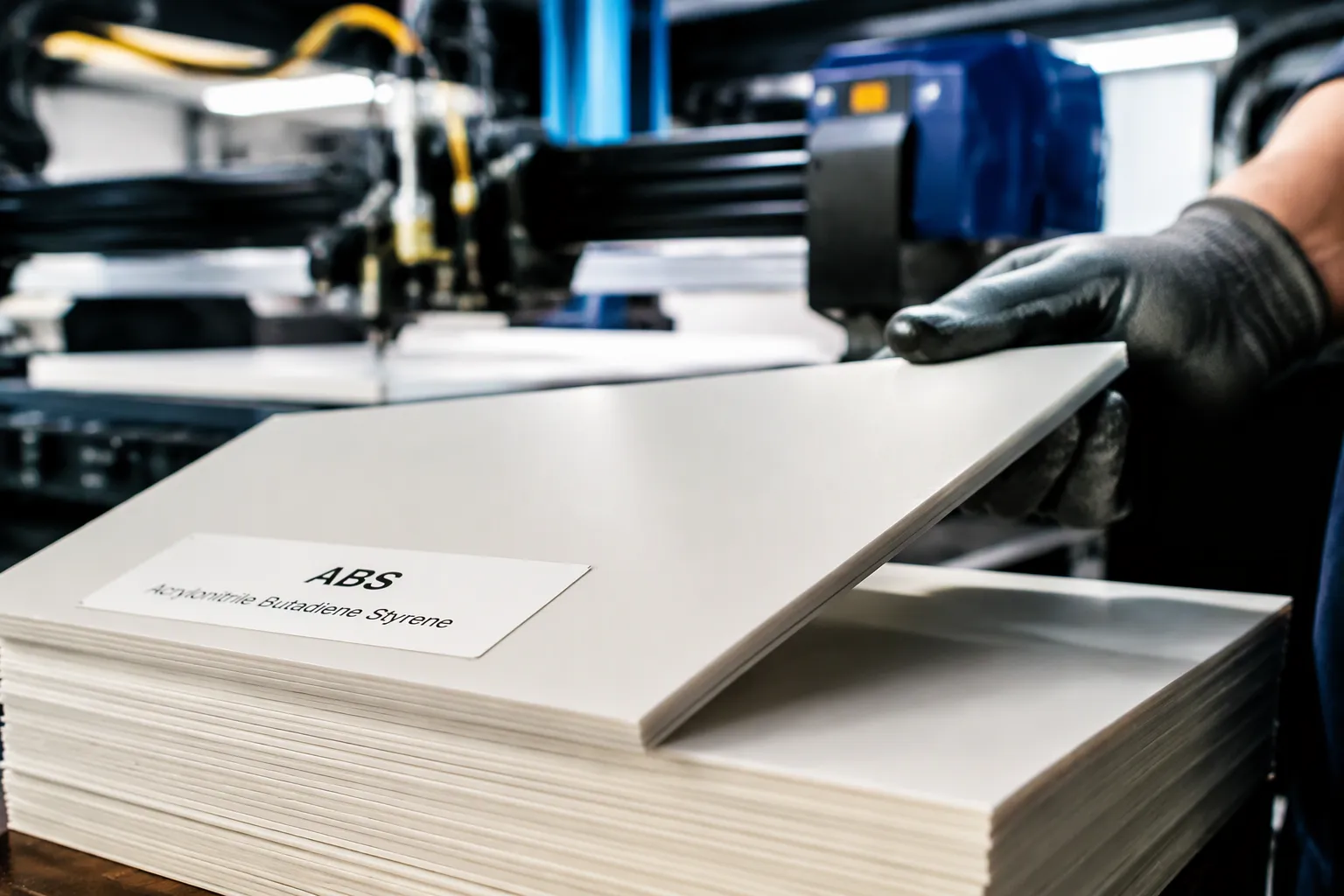
An ABS sheet is a thermoplastic sheet made from acrylonitrile, butadiene and styrene. This guide gives engineers, manufacturers and hobbyists a practical path through ABS plastic properties, grades and applications. A complete overview of ABS helps readers see how each monomer shapes performance. Acrylonitrile adds heat and chemical resistance, butadiene adds toughness, and styrene adds stiffness and easy processing. That understanding lets readers match grade to application instead of choosing by trial and error.
Key Takeaways
ABS sheet is a thermoplastic made from acrylonitrile, butadiene, and styrene. Each monomer gives specific benefits: acrylonitrile adds heat and chemical resistance, butadiene adds toughness, and styrene adds stiffness and easy processing.
ABS sheet gives you a good mix of toughness, stiffness, and chemical resistance. It also takes in very little water and holds its shape well, which makes it a good fit for many indoor uses.
Pick the right ABS grade for your project. General-purpose grades are stiff and shiny, high-impact grades resist drops, and heat-resistant grades handle higher temperatures.
ABS sheet is used in car interiors, electronics housings, medical devices, and consumer goods. It is easy to machine, shape, and finish.
First, match the grade to the application's toughest requirement, such as impact, heat, flame, UV, or food contact. Think about the total cost, not just the purchase price, to avoid rejects and waste.
What Is ABS Sheet?
A Thermoplastic Made from Three Monomers
An ABS sheet is the flat, extruded form of acrylonitrile butadiene styrene. This material is part of the thermoplastic polymer family. That means it softens when heated and hardens again when it cools, with no permanent chemical change. This trait sets a sheet apart from ABS pellets, which are the raw material for extrusion and molding. It also sets it apart from finished molded parts, which already have a fixed shape. A sheet comes as a stock panel. Makers then cut, form, or machine it into the final part.
The sheet grade matters because ABS is an amorphous polymer. Its molecular chains stay disordered instead of packing into crystals. This structure gives the material even shrinkage during cooling and good dimensional stability across a panel. A thermoplastic polymer with this chain layout also takes colorants evenly, which helps keep surface appearance the same from batch to batch. These traits explain why the abs sheet format works well for both prototyping and production runs.
How Each Monomer Shapes Performance
Each of the three monomers does a distinct job in the abs material. Acrylonitrile and styrene together make ABS stiff, while butadiene gives the elastic response that soaks up impact. The table below sums up the role of each part.
Monomer | Contribution to ABS properties |
|---|---|
Acrylonitrile | Chemical resistance, fatigue resistance, hardness, and rigidity; raises the heat deflection temperature. Polar nitrile groups on nearby chains pull on each other and hold the chains together, which makes ABS stronger than pure polystyrene. |
Styrene | A shiny, impervious surface, plus hardness, rigidity, and easier processing. |
Polybutadiene | A rubbery substance that gives toughness and ductility at low temperatures, at some cost to heat resistance and rigidity. Elastic butadiene particles make ABS impact resistant. |
The balance among acrylonitrile, butadiene, and styrene can be adjusted. A formulator can raise the rubber content for more toughness or shift the ratio toward the rigid monomers for higher stiffness and heat performance. That flexibility is why one base chemistry yields many grades. Buyers who understand the monomer roles can read a datasheet with more confidence and predict how a given sheet will act in service.
Key ABS Plastic Properties
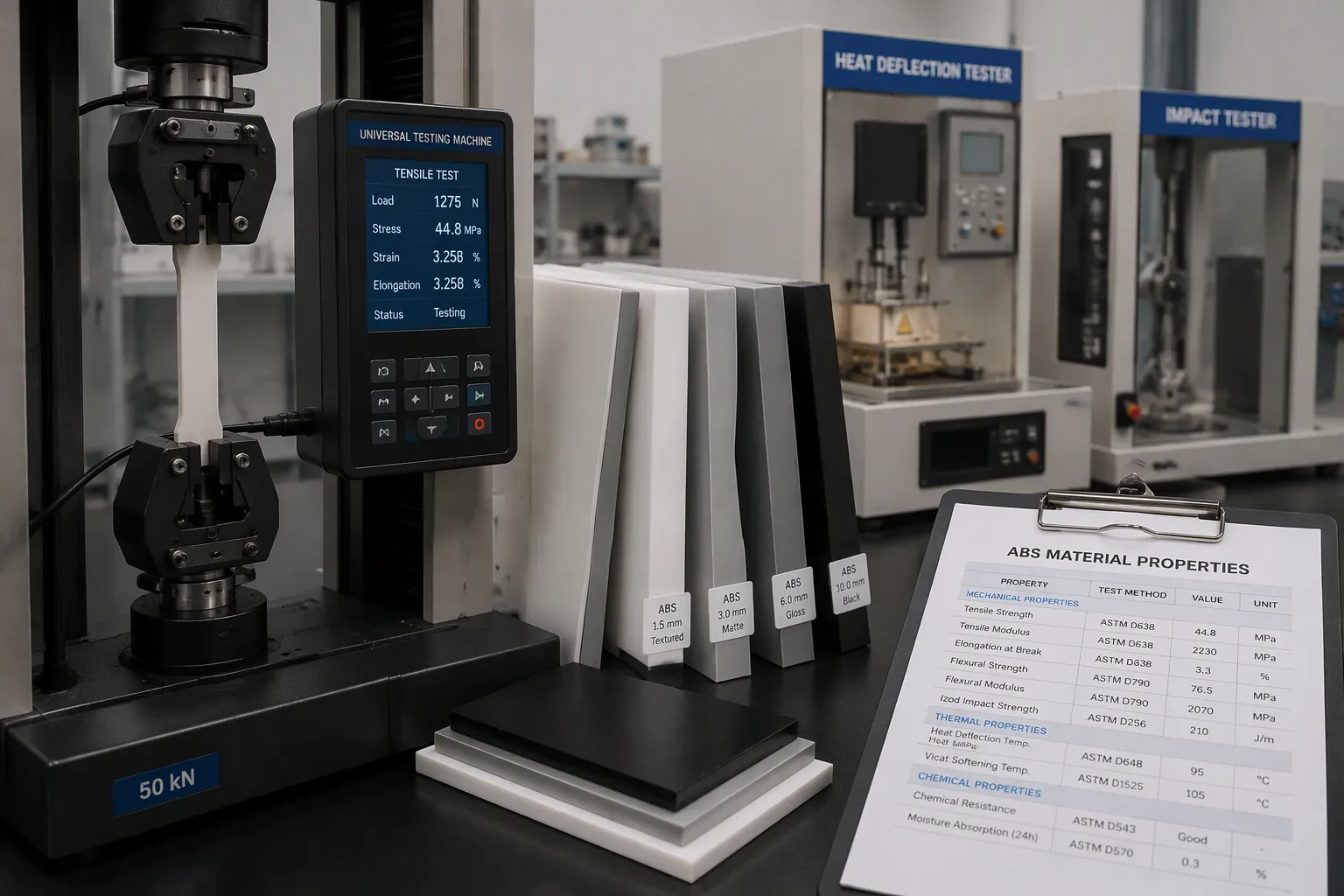
The abs plastic properties that help you pick a sheet come in three groups: mechanical, thermal, and chemical behavior; how it acts during liek fabrication; and how much moisture it takes in. The table below sums up the main numbers. Published values describe one typical grade, not every grade, so use them as a starting point.
Mechanical, Thermal, and Chemical Performance
Property | Test Method | Value | Unit |
|---|---|---|---|
Tensile Strength @ Yield | ASTM D-638 | 6,000 | psi |
Flexural Modulus | ASTM D-790 | 640,000 | psi |
Izod Impact (78°F / -40°F) | ASTM D-256 | 7.5 / 2.5 | ft-lbs/in |
Heat Deflection Temperature (264 psi, unannealed) | ASTM D-648 | 198 | °F |
Mechanical properties like tensile and bending strength show how a part carries a load. These values sketch the strength and durability profile of the abs material. Impact resistance holds up even when it is cold: the Izod figure drops from 7.5 to 2.5 ft-lbs/in between 78°F and -40°F, but it does not fall apart. Tensile strength of about 35-45 MPa and bending strength of about 50-70 MPa give good rigidity and stiffness for a common thermoplastic. Most of that rigidity comes from the styrene part, and the flexural modulus of 640,000 psi shows that stiffness. The abs plastic also resists abrasion and strain from repeated handling, which matters for parts that slide or flex. Impact strength and stiffness pull against each other, so a high-impact grade will feel less rigid than a general-purpose one.
Thermal and chemical behavior finish the picture. Heat deflection near 198°F at 264 psi works for indoor parts, not hot-engine compartments. Heat resistance goes up with more acrylonitrile, and flame-retardant additives can lower it a little. The polymer resists water, inorganic salts, alkalis, and various acids, so cleaning it often is not a problem. Water absorption stays under 1% in most grades, and that low number protects dimensional stability when humidity changes. Concentrated solvents and some hydrocarbons can attack the surface over time, so check exposure with the supplier before you specify ABS for a chemical-rich environment.
Machinability, Finish, and Moisture Behavior
Fabrication is where the characteristics of abs material really pay off. Sheets machine easily on CNC routers, saws, and drills, and they glue, paint, and screen print well. Sharp tooling and moderate feed rates cut down chip welding and leave a clean edge. Thermoforming and vacuum forming handle deep draws because the melt flows evenly. Thin sheets form faster, and thick sheets need longer heating cycles to avoid stress. Buyers pick smooth, matte, or textured surfaces to match how the part should look. A smooth sheet suits high-gloss parts and laminating film, while a matte or textured sheet hides scratches and cuts glare.
Moisture needs its own attention. ABS absorbs between 0.05% and 1.80% by weight, depending on grade and the air around it. Absorbed water can act as a plasticizer, lowering glass transition temperature and strength, and it can swell dimensions enough to matter. Store sheet in a dry area and follow the supplier's drying schedule before forming. Drying stops surface bubbling and keeps the finished part within tolerance.
The properties in the table come from standard ASTM tests on one typical grade. Those properties change with rubber content, additive package, and thickness. Confirm mechanical properties and the physical properties against the supplier's datasheet before release. A full review of mechanical, thermal, chemical, and electrical properties belongs in that step, because sheet grades differ in ways one table cannot capture. The abs material properties you approve should match the part's service conditions, not a generic average. Ask for test reports that cover the grade you will buy, and check the physical properties of the actual lot.
Types of ABS Sheet from Xinhejiu
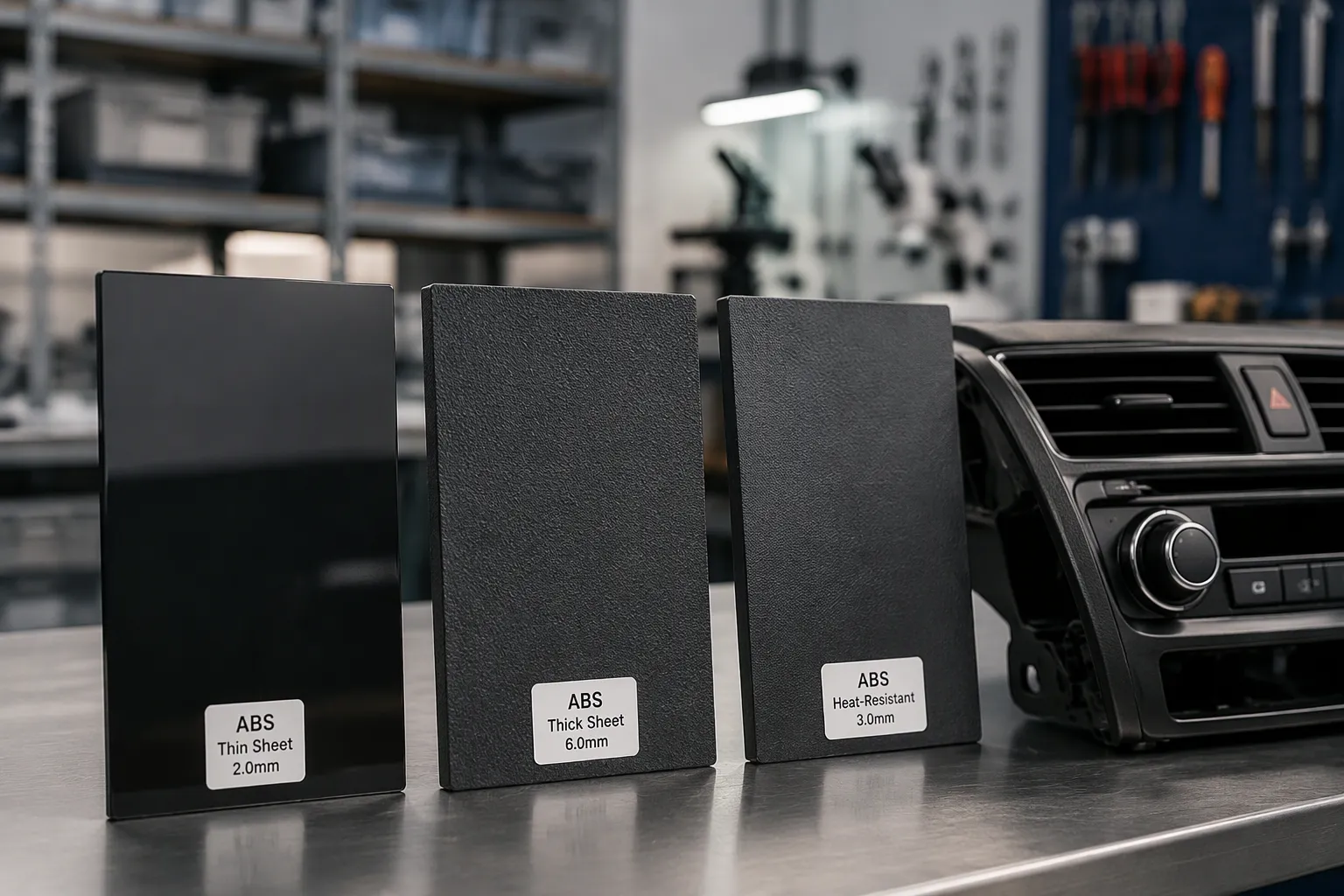
Grade families exist because one base chemistry cannot serve every part. Each family shifts the monomer balance or the additive package toward a specific duty. The table below compares the three core families on tensile strength, impact, heat deflection, and typical use.
Grade | Tensile (MPa) | Notched Izod (J/m) | HDT (°C) | Flame Rating | Typical Use |
|---|---|---|---|---|---|
General-Purpose | 29.6–44 | 200–300 | 88–95 | UL94 HB | Consumer goods, prototypes, signage |
High-Impact | 35–48 | 350–420 | 85–92 | UL94 HB | Cobot end effectors, drop-rated housings |
Heat-Resistant | 35–50 | 180–280 | 100–110 | UL94 HB | Automotive interior, dashboards |
General-Purpose, High-Impact, and Heat-Resistant Grades
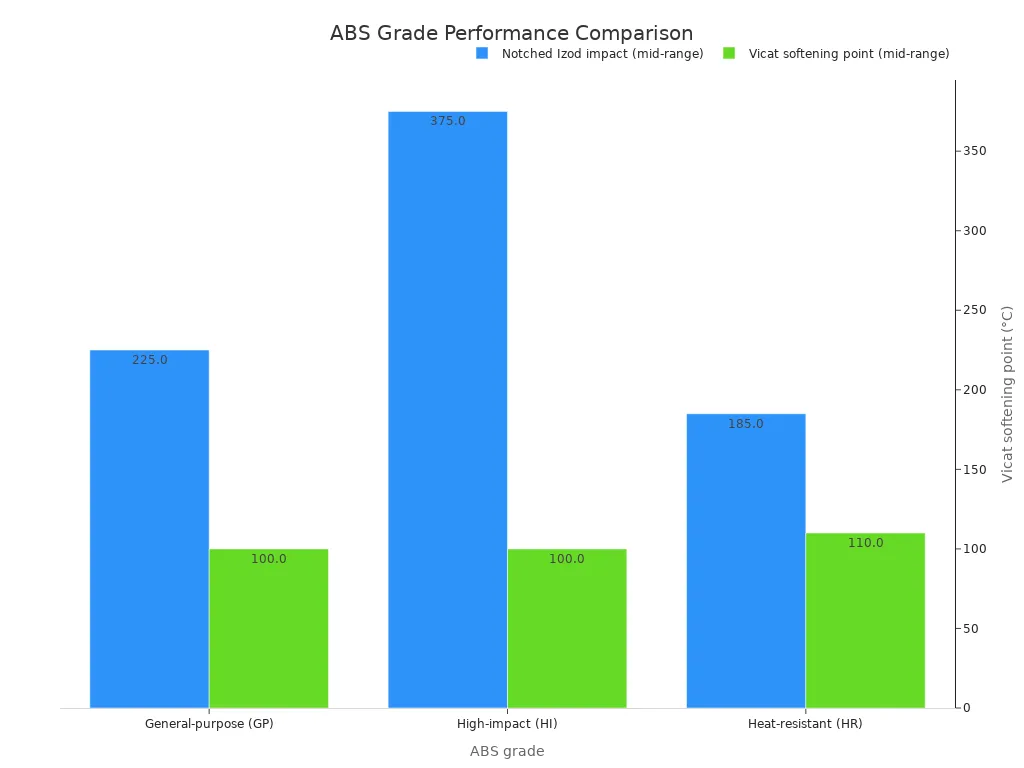
General-purpose ABS has less rubber in it. That choice makes it stiffer, flow better, and look glossier, with notched Izod impact around 150–300 J/m. It works well for toys, housings, fittings, and thin glossy parts. High-impact grades add more butadiene to raise notched Izod to roughly 300–450+ J/m for drop and low-temperature toughness. They do not flow as easily and have a slightly duller surface. Heat-resistant ABS raises the styrene or alpha-methylstyrene content to push the Vicat softening point and heat deflection higher. Standard ABS can start to soften around 90–100°C, so heat-resistant grades fit parts near motors, lighting, or under-hood trim. The chart below compares mid-range impact and Vicat values across the three families.
Xinhejiu supplies its ABS SHEET line in 100% virgin ABS resin, with recycled options available on request. Thickness runs from 0.5mm to 12mm, and the smooth general-purpose sheet spans 0.5mm to 8mm. Widths reach up to 2000mm, and custom sizes are supported. Surface choices include smooth, matte, and textured finishes such as lychee, wood grain, and stone. Color matching follows RAL or Pantone references.
Flame-Retardant, UV-Resistant, and FDA-Compliant Grades
ABS burns when exposed to flame or high heat, so flame-retardant additives reduce that flammability. Xinhejiu offers UL94 V-0 flame retardancy for electrical equipment, automotive components, and building materials. UV exposure can fade color, degrade the surface, and weaken mechanical properties over time. UV stabilizers and aging inhibitors added before extrusion counter that damage, which supports outdoor signage and exterior trim. FDA-compliant formulations meet U.S. Food and Drug Administration rules for food contact, covering food processing equipment and packaging. These grades are non-toxic and odorless. Manufacturing runs under ISO 9001:2015, and certified test reports cover smoke density, oxygen index, and impact strength.
These abs material grades cover most standard needs. Some projects call for more. Xinhejiu offers eight major product series, including ASA/ABS, PC/ABS, and PMMA/ABS sheets, for readers whose requirements extend beyond standard ABS. The injection moulding process also accepts ABS pellets for molded parts, while sheet grades serve forming and machining. Typical applications for the sheet line include automotive interiors, medical housings, sanitary ware, and industrial prototyping. Buyers comparing abs sheets across families should confirm impact, heat, flame, UV, or food-contact needs first, then match the grade and thickness.
ABS Applications by Industry
Automotive, Construction, and Electronics
Car interiors are one of the biggest uses for ABS sheet. Instrument panels, door trims, center consoles, glove-box surrounds, air-vent bezels, and speaker grilles all depend on this material. Xinhejiu supplies vehicle-interior sheet solutions in ABS, ASA/ABS, PC/ABS, and PMMA/ABS. These sheets can act as the visible surface or as a structural layer in formed trim parts. Pre-colored and textured surfaces can cut down on painting steps and keep appearance more consistent across production batches.
Construction and electronics use the same mix of toughness and formability. Architectural cladding and outdoor signage gain from UV-stabilized grades. Equipment housings, keyboards, computer mice, remote controls, and electronic enclosures use ABS for its impact resistance and clean molding. These abs applications work well indoors and in sheltered outdoor settings. Long periods of direct sun call for a UV-resistant grade.
ABS Material Applications and Uses by Sector
The abs material applications and uses reach across many sectors. The table below groups common uses by industry.
Sector | Typical ABS applications |
|---|---|
Consumer electronics | Keyboards, mouse devices, remote controls, audio/video equipment housings |
Automotive | Dashboards, instrument panels, door panels, trim, grilles, mirror housings |
Household appliances | Vacuum cleaners, blenders, coffee makers, kitchen utensils |
Medical devices | Device housings, equipment casings, laboratory tools, disposable syringes |
Sports and recreation | Helmets, protective gear, skateboards, bicycles |
Healthcare and consumer goods are another strong fit. Medical device housings, medical carts, and sterilization equipment use ABS sheet for its chemical resistance and dimensional stability. Sanitary ware, storage and shipping containers, pallets, and dunnage also depend on it. Industrial prototyping completes the list of industrial applications, where easy machining and thermoforming shorten development cycles. These applications of abs material show where the sheet works well. Each sector should still confirm its own performance requirements before specification.
Advantages, Limitations, and Selection Tips
Strengths and Trade-Offs
The abs plastic advantages begin with toughness. Butadiene rubber soaks up shocks and keeps cracks from spreading, and that impact resistance still works in cold conditions. Dimensional stability, easy dyeing, and clean machining come next. The sheet thermoforms well, resists diluted acids and alkalis, and costs less than polycarbonate. A continuous use range of -4°F to 176°F covers most indoor parts.
The abs plastic disadvantages should get the same attention. Heat resistance is lower than engineering plastics such as PC, so hot places need another grade or material. Solvents like acetone and chlorinated compounds harm the surface, and untreated sheet fades in sunlight. These specific properties and limitations of abs lead to one conclusion: match the grade to the job. Polycarbonate fits high-heat, clear parts; polypropylene fits chemical-heavy, flexible parts. ABS fits balanced toughness, finish, and cost.
Matching Grade to Application and Cost
Begin with the hardest requirement. Check impact, heat, flame, UV, or food-contact performance first, then choose the grade and thickness. High-impact grades work for drop-rated housings, heat-resistant grades work for dashboards, and UV-stabilized grades work for outdoor signage. For snap-fits, check tensile strength, flexural modulus, and strain at yield together.
Purchase price is only one cost input. A cheaper grade can raise rejects, cycle time, or scrap and lift cost per acceptable part. Density matters too: at 1.04 versus 1.08 g/cm³, the lighter material uses about 3.7% less mass per part. Xinhejiu's engineering team supports this work with pre-sales selection analysis, free sample books covering smooth, matte, and textured swatches, color matching, and custom width and length trimming that cuts machining scrap. These services shorten the trial-and-error loop across many applications.
An ABS sheet is a thermoplastic panel made from three monomers, and its performance follows a clear logic: the resin gives it its properties, grades adjust those properties, and applications set the requirements. A simple checklist helps you choose. First, confirm the impact, heat, flame, UV, or food-contact performance you need. Then match that requirement to the right grade and thickness. A supplier's technical team can make this process faster. Xinhejiu's engineers offer pre-sales selection analysis and a free sample program, which cut down on trial and error before a production run. The material will keep serving industrial fabrication and prototyping, where balanced toughness, finish, and cost still matter.
FAQ
How do I choose between a smooth and a matte ABS sheet?
A smooth sheet works well for high-gloss parts and laminating film. A matte or textured sheet hides scratches and reduces glare, which helps automotive components and medical device covers. Match the finish to how the part will be seen and handled.
Can sheet dimensions be customized to reduce machining scrap?
Yes. Xinhejiu offers flexible width and length trimming. Share the required dimensions with the engineering team before ordering. Pre-trimmed sheets cut waste and lower the cost per finished part.
Which certifications do these sheets meet?
The ABS SHEET line meets UL94 V-0 flame retardant standards. Certified test reports cover smoke density, oxygen index, and impact strength. Manufacturing runs under ISO 9001:2015.
Are ABS sheets suitable for outdoor applications?
Standard ABS fades under long sun exposure. UV-stabilized grades with aging inhibitors extend outdoor lifespan. These grades fit outdoor signage and exterior trim. Confirm the exposure conditions with the supplier first.
Can I request samples before a bulk order?
Yes. Xinhejiu provides free sample books with smooth, matte, and textured swatches. Color-matching service follows RAL or Pantone references. Samples let buyers check finish and color before committing to production.