



How to Choose the Best Value PMMA Sheet
 Aug 24, 2026|
 View:149
When you buy a polymethyl methacrylate (PMMA) sheet for your project, you want it to last. But soon, it might crack or turn yellow. Then you feel like you wasted your money. The best value is not the lowest price. It is the right mix of performance, durability, and cost for your specific use.
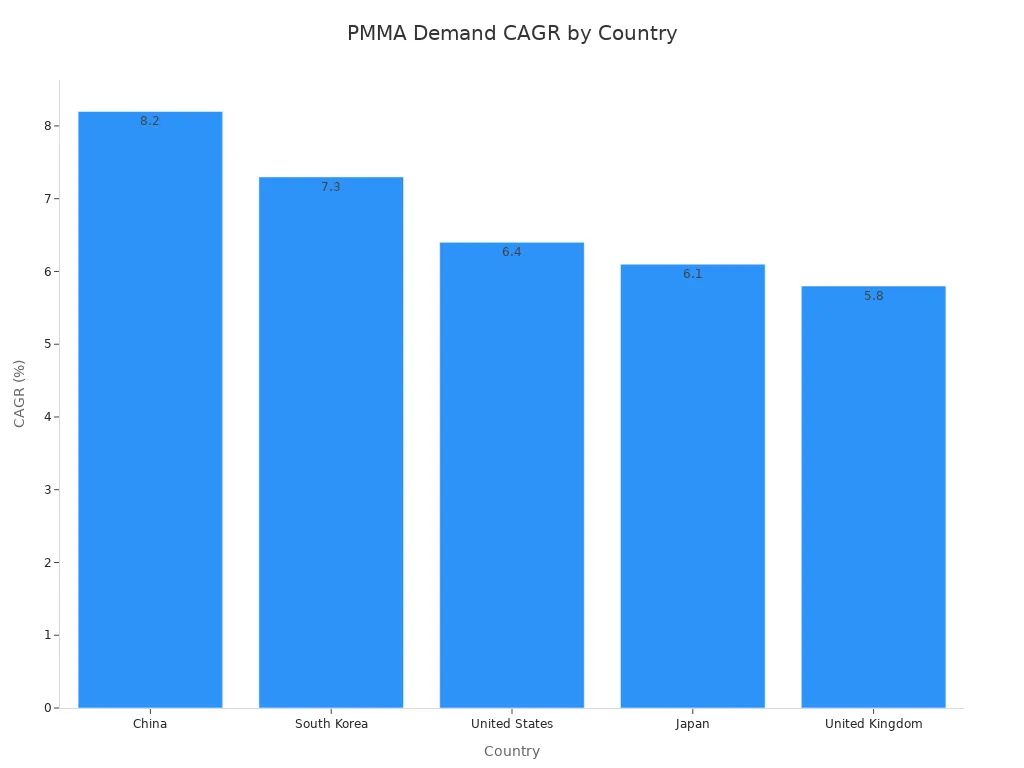
The global market for acrylic sheets is growing quickly. It is expected to reach USD 11.7 billion by 2036. This high demand gives you many price choices. You must compare PMMA sheet price and quality carefully. Many uses take advantage of acrylic sheets because they are durable. The acrylic surface resists scratches well.
This guide helps you understand price quotes. You will learn how to match sheet properties to what your project needs. Picking the right acrylic sheets saves money. By the end, you will make a confident, cost-effective buying choice.
Key Takeaways
The best PMMA sheet for your money gives you good performance, long life, and the right price.
Acrylic that is chemically recycled gives you the same clear, strong quality as new acrylic, but it costs less.
Match the sheet's thickness, clarity, and durability to your needs so you don't pay too much.
Cast acrylic gives better clarity and chemical resistance, but it costs 20 to 40 percent more than extruded.
Compare the full cost of getting the sheets to you, buy in large amounts, and plan your cuts to lower your total spending.
PMMA Price vs. Material Quality
The first step to understanding a PMMA sheet price quote is to look at the material's origin. Not all acrylic sheets are created equal. The core trade-off lies between initial cost and long-term performance. You often choose between virgin (new) material and recycled content. This choice directly impacts the quality, durability, and final cost of your project.
Virgin vs. Recycled: Performance Trade-Offs
Virgin PMMA comes from newly manufactured raw materials. It sets the benchmark for performance. Recycled PMMA comes in two main types: chemically recycled and mechanically recycled. Their performance differs greatly.
Chemically recycled acrylic can match virgin material in key areas. For example, both offer about 92.5% light transmission and only 0.5% haze. This means they are equally clear. Their tensile strength and flexural modulus are also identical at 79 MPa and 3,300 MPa, respectively. This suggests similar structural integrity and potential impact resistance. The Vicat softening temperature for both is 109°C.
Mechanically recycled acrylic tells a different story. This process involves grinding and re-melting old acrylic sheets. Performance degrades with each cycle. After five recycling cycles, total light transmission can drop from 90.4% to 68.2%. Haze can increase to 22%. This material becomes cloudy and less transparent. While the price is lower, the optical quality suffers significantly.
Here is a clear comparison of their key properties:
Metric | Virgin PMMA | Chemically Recycled PMMA | Mechanically Recycled PMMA (after 5 cycles) |
|---|---|---|---|
Total light transmission | 92.4% | 92.5% | Declined to 68.2% |
Haze | 0.5% | 0.5% | Increased to 22% |
Tensile strength | 79 MPa | 79 MPa | Not reported |
Flexural modulus | 3,300 MPa | 3,300 MPa | Not reported |
Chemically recycled acrylic sheets offer a good balance. They provide virgin-grade performance for clarity and strength at a potentially lower cost. Mechanically recycled sheets save you the most money upfront. You should use them for applications where perfect clarity is not critical. Think of internal structural components or short-term signage.
When to Invest in Premium Grades
Choosing a lower-grade material based solely on a cheap PMMA sheet price can be a false economy. The initial savings may disappear over time. A sheet that yellows, cracks, or loses its gloss will need replacement. This adds labor, downtime, and new material costs.
This is where the philosophy of "high-quality production, great values" becomes crucial. Investing in premium, virgin-grade acrylic sheets often delivers greater long-term value. You pay more initially, but you get a product that lasts longer and performs better. This reduces total cost through fewer replacements and lower maintenance.
You should invest in premium grades for specific applications. Demand high-clarity virgin or chemically recycled acrylic for optical lenses, museum displays, or high-end retail fixtures. Any project requiring perfect light transmission needs this quality. For exterior applications, premium grades with enhanced UV stabilizers prevent yellowing and brittleness. This extends the life of outdoor signs or architectural cladding by years.
Applications subject to impact, frequent cleaning, or harsh chemicals also benefit. The superior mechanical properties of virgin material resist stress cracking and chemical attack. This is vital for sanitary ware, laboratory equipment, or automotive trim. Premium acrylic sheets also offer more consistent quality and color. This ensures a perfect match across large batches or complex projects.
Your price range analysis should include this lifetime cost perspective. Do not just compare the upfront PMMA sheet price. Consider how long you need the sheet to last and what conditions it must endure. Matching the material quality to these demands is the smartest way to control costs and ensure project success.
Matching PMMA/ABS Sheet to Application

Key Factors: Thickness, Clarity, and Durability
When you choose acrylic sheets, three main things guide your choice: thickness, clarity, and durability. These factors affect how the sheets work and what you pay. Thicker sheets are stronger and resist impact better. They are good for structural parts. But they let a little less light through. The table below shows how thickness changes light transmission.
Thickness Range | Light Transmission Behavior |
|---|---|
1.5mm - 5mm (Thin) | Highest light transmission, very little light is absorbed, best clarity. |
6mm - 15mm (Medium) | Small but clear drop in light transmission because more material is in the way. |
16mm - 30mm (Thick) | Bigger drop in transmission rates, but still keeps very good clarity. |
The thickness you pick affects cost. For parts that need strength, do not go thinner. For many uses, thin acrylic sheets work best when you want perfect clarity. For structural parts, thick acrylic sheets give the needed strength. Clarity depends on the sheet quality. Virgin material gives the highest clarity. Recycled material may look hazy. For displays or windows, you want very little haze. Different uses need different levels of durability.
Durability includes impact strength, scratch resistance, and UV stability. High impact strength stops cracking. Scratch resistance keeps the surface looking new. UV stability stops yellowing. The Xinhejiu PMMA/ABS sheet is a high-performance acrylic sheet. It has a pencil hardness of F or above. Its ABS base gives high impact strength. The PMMA top layer provides UV resistance and a glossy surface. This makes it perfect for decorative surfaces. For furniture, scratch resistance is very important. The sheet also resists chemicals well, so it is good for kitchen and bathroom use.
You must also think about thickness and tolerance. Tight tolerance means steady performance. Thicker sheets often have wider tolerance ranges. Check with your supplier.
How Application Drives PMMA Sheet Price
Your use decides the best material to pick. Different uses need different features. These features then set the price. For example, luxury bathroom items need a high-gloss, scratch-resistant surface. The Xinhejiu PMMA/ABS sheet delivers that. It resists chemicals and stains. This type of sheet costs more than a basic sheet. But it saves money over time. These uses demand high performance.
Car exterior parts need UV resistance and impact strength. Advertising displays need clarity and color consistency. You can pick thin acrylic sheets for light boxes. For signs and branding, you might need thicker acrylic sheets for durability. Price changes with thickness and color.
For home appliance casings, like refrigerator panels and washing machine control panels, the sheet gives a high-gloss surface that resists scratches. This improves the product's look and how long it lasts.
Furniture and interior design projects use acrylic sheets for decorative panels. You might want a glossy or matte surface. Custom colors cost more, while standard ones are cheaper.
Aquariums and windows need thick acrylic sheets for strength. A heavy-duty aquarium needs thick sheets that can handle water pressure. This raises the PMMA sheet price. For windows, you might need UV protection.
Common uses include home appliances, electronic housings, and lighting fixtures. Acrylic sheets are versatile and fit many uses. You must match the sheet features to what the use needs. For critical uses, think about the manufacturing method.
When you look at quotes, consider the specific needs of your use. Ask about thickness and tolerance, color and surface finish, and durability features. Also think about the manufacturing method. A cast acrylic sheet offers better optical clarity. It costs more than extruded options. But for high-end displays, the extra cost is worth it.
Cast Acrylic Sheet vs. Extruded Options
The way your acrylic sheets are made changes both performance and cost. Two main methods rule the market: cell casting and continuous extrusion. Each one creates a different material with its own strengths. Knowing these differences helps you pick the right product for your project.
Key Differences in Cost and Performance
Cast acrylic usually costs about 20% more than extruded acrylic in similar sizes. The price gap comes from how it is made. Cell casting is slower, needs more labor, and makes smaller batches than continuous extrusion. For a 6mm thick sheet, you might pay $30–$55 per square meter for cast material. Extruded options run $20–$38 per square meter. That extra cost ranges from 20% to 40% depending on the supplier.
Metric | Cast Acrylic | Extruded Acrylic |
|---|---|---|
Cost per m² (6mm thickness) | $30–$55 | $20–$38 |
Cost premium of cast over extruded | 20–40% higher | Baseline |
The performance differences make that price worth it for many uses. Cast acrylic reaches up to 92% light transmission, the highest of any acrylic type. Extruded PMMA offers good but less even clarity. Cast material also resists solvents and harsh chemicals better. Extruded acrylic has lower chemical resistance and may craze when exposed to certain substances.
Molecular weight explains much of this gap. Cast acrylic reaches 1.5–2.2 million g/mol, while extruded acrylic only reaches 0.8–1.2 million g/mol. This difference leads directly to better impact strength, chemical resistance, and thermoforming performance.
Choosing the Right Manufacturing Method
Your applications should guide the choice between these two materials. For laser cutting and engraving, a cast acrylic sheet gives cleaner edges and a nicer finish. Extruded acrylic produces rough, melted edges under the same process. Cast material also stays rigid under heat, while extruded acrylic may warp or deform in high-temperature settings.
Machining tolerance matters for precision work. Cast acrylic achieves ±0.001″ (0.025 mm) with annealing. Extruded acrylic offers ±0.003–0.005″ (0.076–0.127 mm). However, extruded sheets have tighter thickness tolerance at ±5%, compared to ±10–15% for cast. This makes extruded material better for vacuum forming where consistent thickness is critical.
For signage and branding: Choose 3mm to 5mm opal or colored cast acrylic. This thickness stays lightweight but rigid enough for wind loads.
For furniture and interior design: Choose 10mm to 20mm clear or tinted cast acrylic. Thicker sheets prevent bowing under weight.
For aquariums and windows: Choose 20mm+ clear cast acrylic. Cast material bonds chemically, creating joints stronger than the sheet itself.
General rule: Choose cast acrylic for optical clarity, chemical resistance, or laser cutting. Choose extruded for tight budgets and precise thickness needs.
The right choice balances your quality needs against your budget. A cast acrylic sheet delivers superior performance for demanding applications. Extruded options save money when those extreme properties are unnecessary.
Smart Strategies for Value from Xinhejiu
You can save money on acrylic without losing quality. Smart buyers look past the sticker price. They think about the full cost of their project. This section shows you practical ways to get the best value from your acrylic sheets.
Comparing Quotes and Avoiding Hidden Costs
A low unit price does not always mean a low total cost. You must compare quotes carefully. Look at the total landed cost. This includes per-unit price, tooling amortization, freight, and duties. A supplier with a higher unit price might offer lower shipping costs. That could make their quote cheaper overall.
Check the lead time and capacity. Ask about quoted weeks and the ability to handle surge demand. A supplier with backup production lines can deliver faster. This prevents costly delays. Quality and certification matter too. Look for ISO 9001, UL, RoHS, or PPAP as required. These certifications and quality standards protect you from defects. Technical capability also matters. Ask about co-extrusion and custom die design. A supplier who can handle your specific needs saves you from sourcing multiple vendors.
Factor | What to Check |
|---|---|
Total landed cost | Per-unit price, tooling, freight, duties |
Lead time and capacity | Quoted weeks, surge handling, backup lines |
Certification and quality standards | ISO 9001, UL, RoHS, PPAP |
Technical capability | Co-extrusion, custom die design, material range |
Communication and risk | Responsiveness, IP protection, location |
Prototyping and flexibility | Willingness to prototype, low MOQ |
Bulk Buying and Fabrication Savings
Bulk purchasing lowers your pmma sheet price significantly. Manufacturers offer discounts for large volume orders. This reduces the per-sheet material cost. Fixed shipping costs spread over more units. Your cost per unit drops further. Larger stock reduces reorder frequency. This cuts storage and handling expenses.
Cost Reduction Area | How Bulk Purchasing Helps |
|---|---|
Unit Price | Discounts for large volume orders |
Shipping | Fixed costs spread over more units |
Inventory Management | Less reordering, fewer delays |
Fabrication savings come from smart cutting. Nesting arranges multiple parts on one sheet efficiently. Parts fit together like puzzle pieces. This maximizes sheet usage and reduces scrap. Modern laser cutting software evaluates part geometry and kerf width. Narrow kerf width removes minimal material. This lowers scrap levels significantly.
Follow these steps to minimize waste:
Optimize design layouts by placing parts close together on a single sheet.
Use nesting software to arrange parts automatically.
Select the appropriate acrylic thickness for each function.
Use efficient cutting paths that reduce overlap and double cuts.
Repurpose offcuts for smaller components.
Xinhejiu offers customized solutions that help you avoid overpaying. You can choose thicknesses from 0.5mm to 8mm. You can select colors and finishes that match your exact needs. This means you do not pay for unnecessary features. The spray-free, recyclable materials reduce VOC emissions. This eco-friendly approach also cuts finishing costs. For furniture, branding, and many other applications, these strategies deliver lasting value. A cast acrylic sheet offers premium clarity for high-end displays. For other applications, standard options work well. Smart shopping means matching quality to your needs. This approach saves money without compromising performance.
The best value PMMA sheet is not the cheapest one. It is the sheet that fits what your project needs. Start by figuring out how you will use it. Think about thickness, UV resistance, and impact strength. Then pick between new and recycled material. Choose between a cast acrylic sheet and extruded options. Cast gives better clarity for tough jobs. Extruded saves money when exact clarity is not needed.
Finally, shop smart. Compare quotes beyond just the unit price. Include shipping, lead time, and fabrication costs. Buying in bulk and cutting efficiently reduce waste. This way, you lower your total acrylic cost without losing quality.
Use these ideas on your next project. You will avoid common mistakes and get acrylic sheets that last and perform well. The right acrylic choice saves money over time. Make your purchase count.
FAQ
How Much Does a PMMA Sheet Cost?
A standard extruded acrylic sheet costs $20–$38 per square meter for 6mm thickness. A cast acrylic sheet runs $30–$55 for the same size. Your final price depends on thickness, color, and material quality. Recycled options cost less. Premium virgin grades cost more.
What Is the Difference Between Cast and Extruded Acrylic?
Cast acrylic offers better optical clarity and chemical resistance. It costs about 20–40% more than extruded. Extruded acrylic provides tighter thickness tolerance at ±5%. It works well for vacuum forming and budget projects. Choose cast for laser cutting and high-end displays.
Can I Use Acrylic Sheets Outdoors?
Yes. Many acrylic sheets resist UV light and prevent yellowing. The Xinhejiu PMMA/ABS sheet extends outdoor service life by 30–50%. For exterior signage or cladding, choose a grade with UV stabilizers. This protects your investment from sun damage.
What Thickness Do I Need for My Project?
Thin sheets from 1.5mm to 5mm offer the best clarity. They work for displays and light boxes. Medium sheets from 6mm to 15mm balance strength and transparency. Thick sheets above 20mm handle heavy loads. Use them for aquariums and structural panels.
Are Recycled Acrylic Sheets a Good Value?
Chemically recycled acrylic matches virgin performance. It offers 92.5% light transmission and equal strength. Mechanically recycled acrylic loses clarity after multiple cycles. Its haze increases to 22%. Use recycled material for internal parts or short-term applications. Save premium grades for visible surfaces.